
Homes
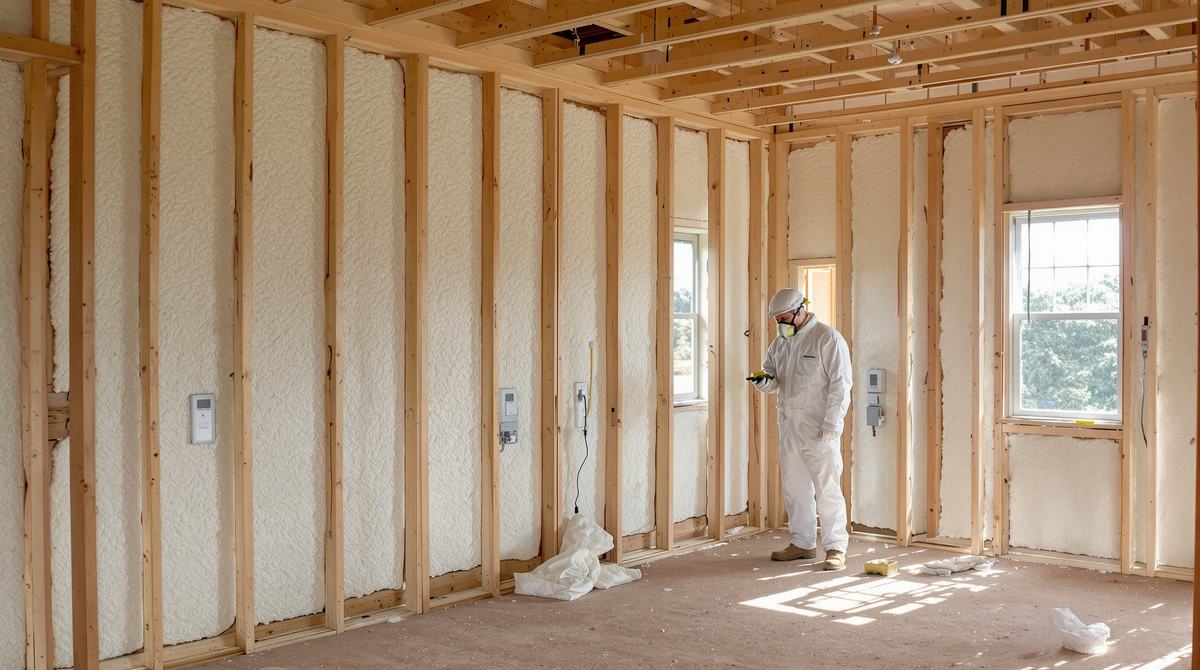
Open walls, sealed.
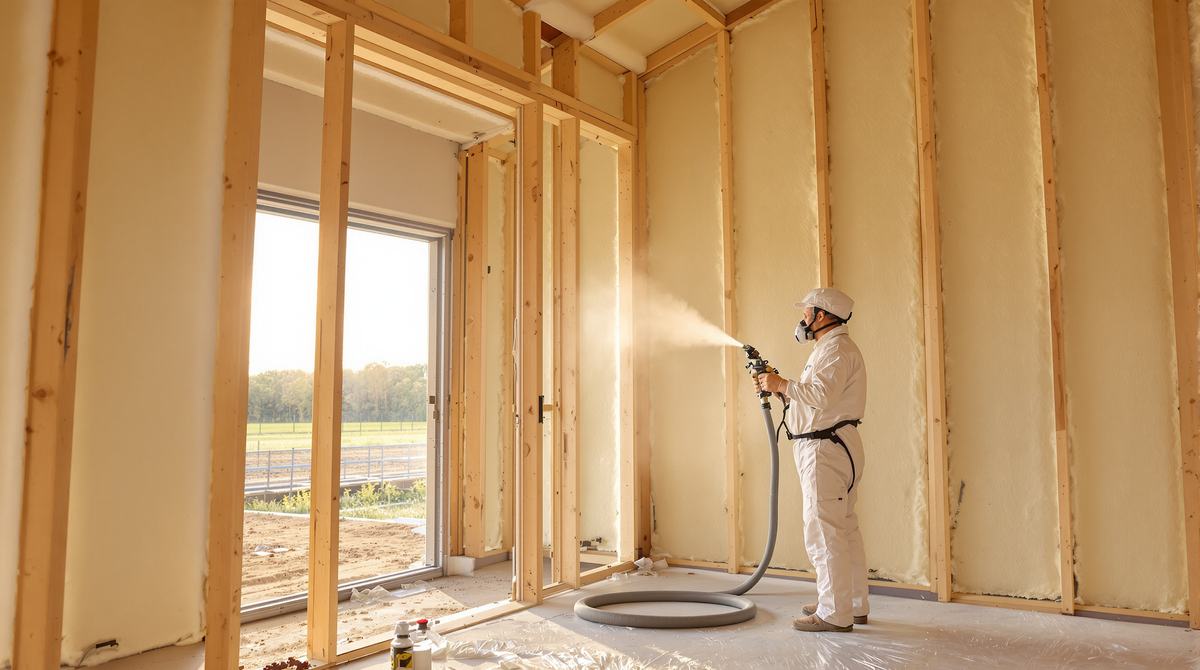
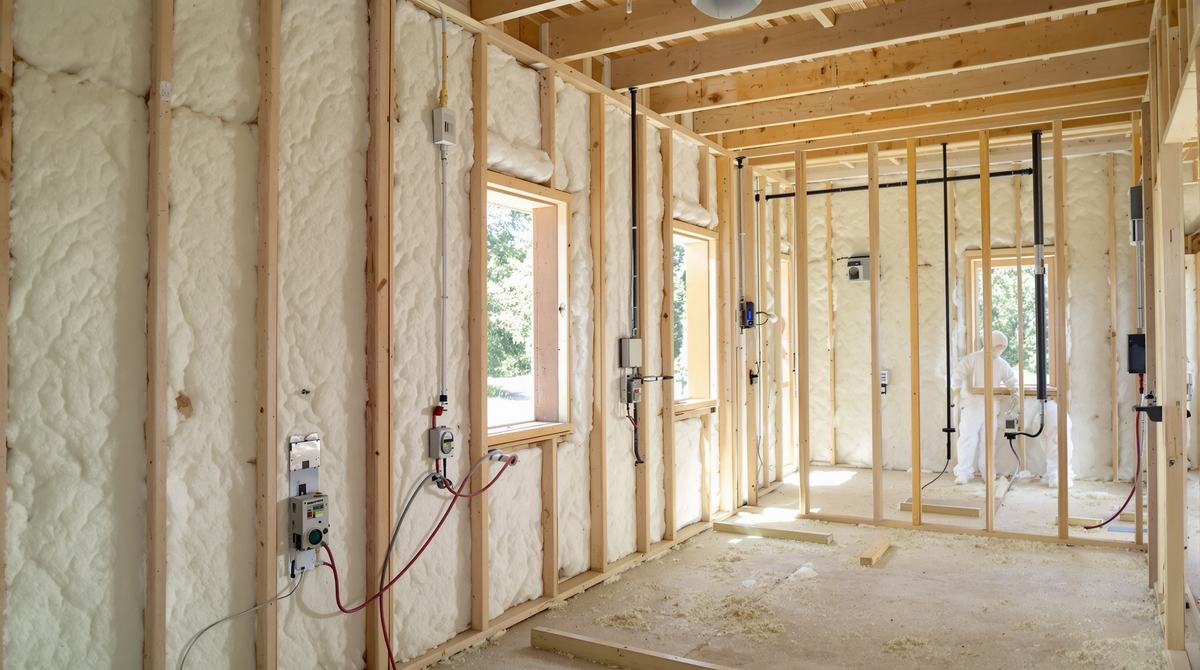
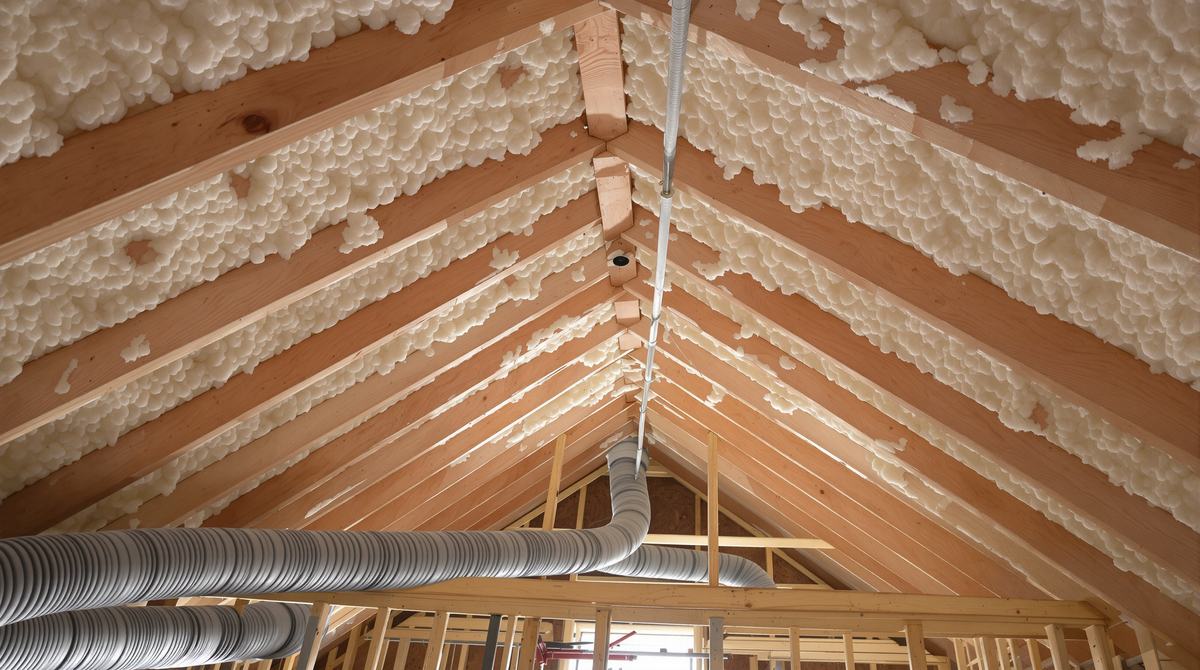
Spray foam for open wall cavities in new builds, additions and remodels.
How we do it.
- Open walls only.We don't inject foam into finished, closed walls, because there's no way to guarantee every cavity gets filled.
- Open cell, 3.5 inches or more.An air barrier that also dampens sound.
- Closed cell, 2 inches or more.Adds a moisture and vapor barrier, and strength.
- Covered in living space.Foam in a living space needs to be covered or coated.
Foam and thickness.
| Foam | Where it goes | Typical thickness | R-value per inch |
|---|---|---|---|
| Open cell | Open wall cavities | 3.5 in + | R-3.8 to 4.2 |
| Closed cell | Open wall cavities | 2 in + | R-7.6 to 8.1 |
R-value measures how well insulation holds back heat. Higher is better. Closed cell is rigid and also blocks moisture; open cell is softer and dampens sound. Ranges are from Universal Polymers (UPC) data sheets, tested at 1 inch. We choose the foam for each job. See the data sheets
Questions.
Can you insulate my existing finished walls?
We don't inject foam into closed walls, because there's no way to guarantee every cavity gets filled. We spray open walls in new builds, additions and remodels.
What's the difference between open cell and closed cell?
Open cell is used in attics, walls and for sound dampening, above grade, and works as an air barrier. Closed cell does everything open cell does except sound dampening: it's also a moisture and vapor barrier, and it adds strength.
How long before we can go back inside?
Contractors can go back in after 12 hours. Homeowners after 24 hours.
Get a quote
Tell us about the walls.
Tell us what you're insulating. Prefer to talk? Call or text (765) 639-6136
- Quotes within 24 hours
- On site or over the phone
- Photos help us quote faster
- Lifetime, transferable foam warranty